
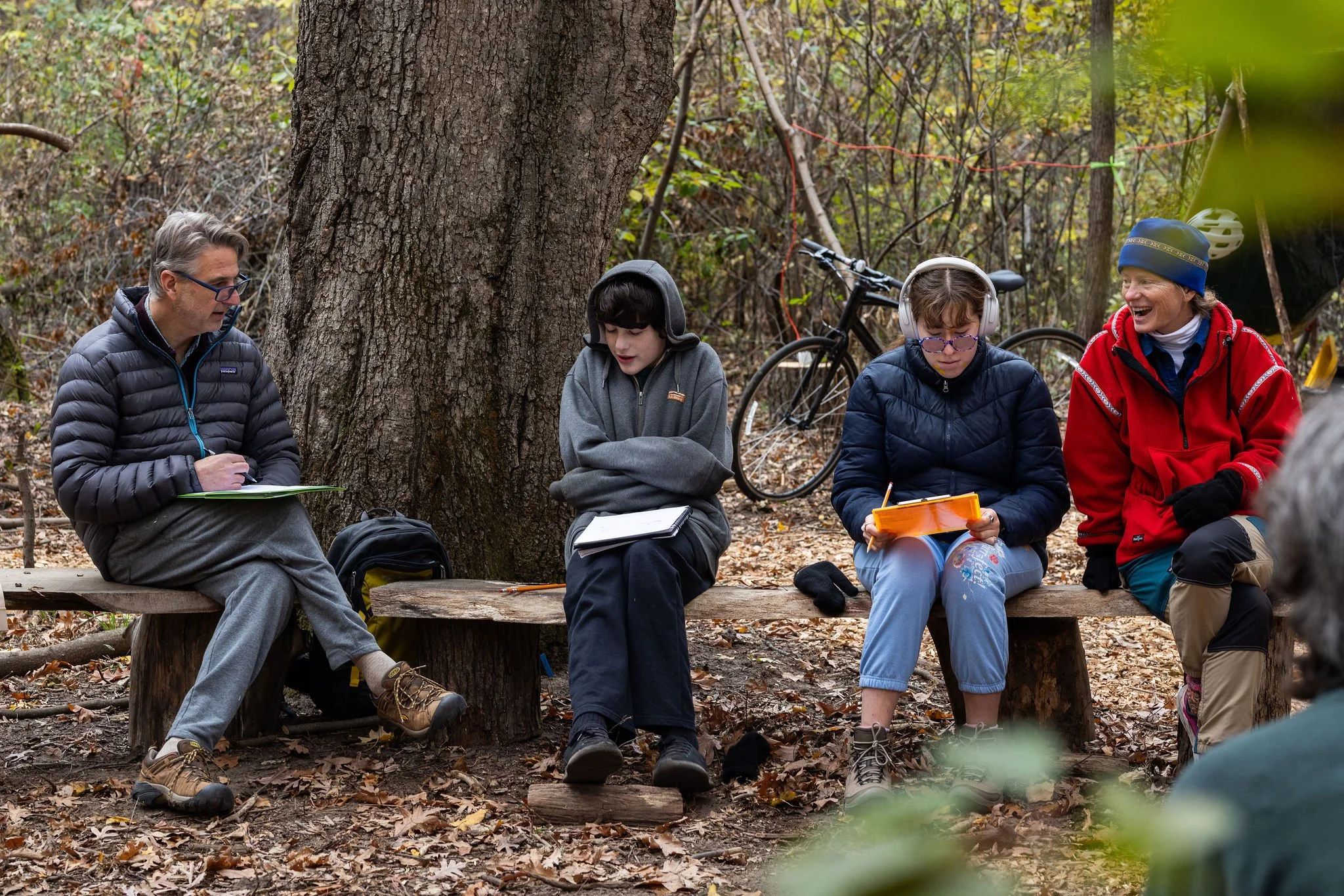

Our students think beyond the box, and learn beyond the classroom.
The defining feature of OFA is that subjects usually taught in isolation (science, history, English, for example) are brought together in a central core class, organized by a larger, real world scenario. Our interdisciplinary approach emphasizes active learning, critical thinking, and problem solving skills, equipping students with the adaptability to thrive in an increasingly interconnected world.
Every quarter we will explore a new Core theme. During the quarter, teachers will present material, tying together disparate subjects within the narrative of the Core. Students learn by research, discussion, lecture, experimentation, and observation. They choose a topic within the Core theme that is of particular interest to them, and develop a project that addresses a specific problem. This project becomes the focus of their work as the quarter progresses, culminating in a community presentation.
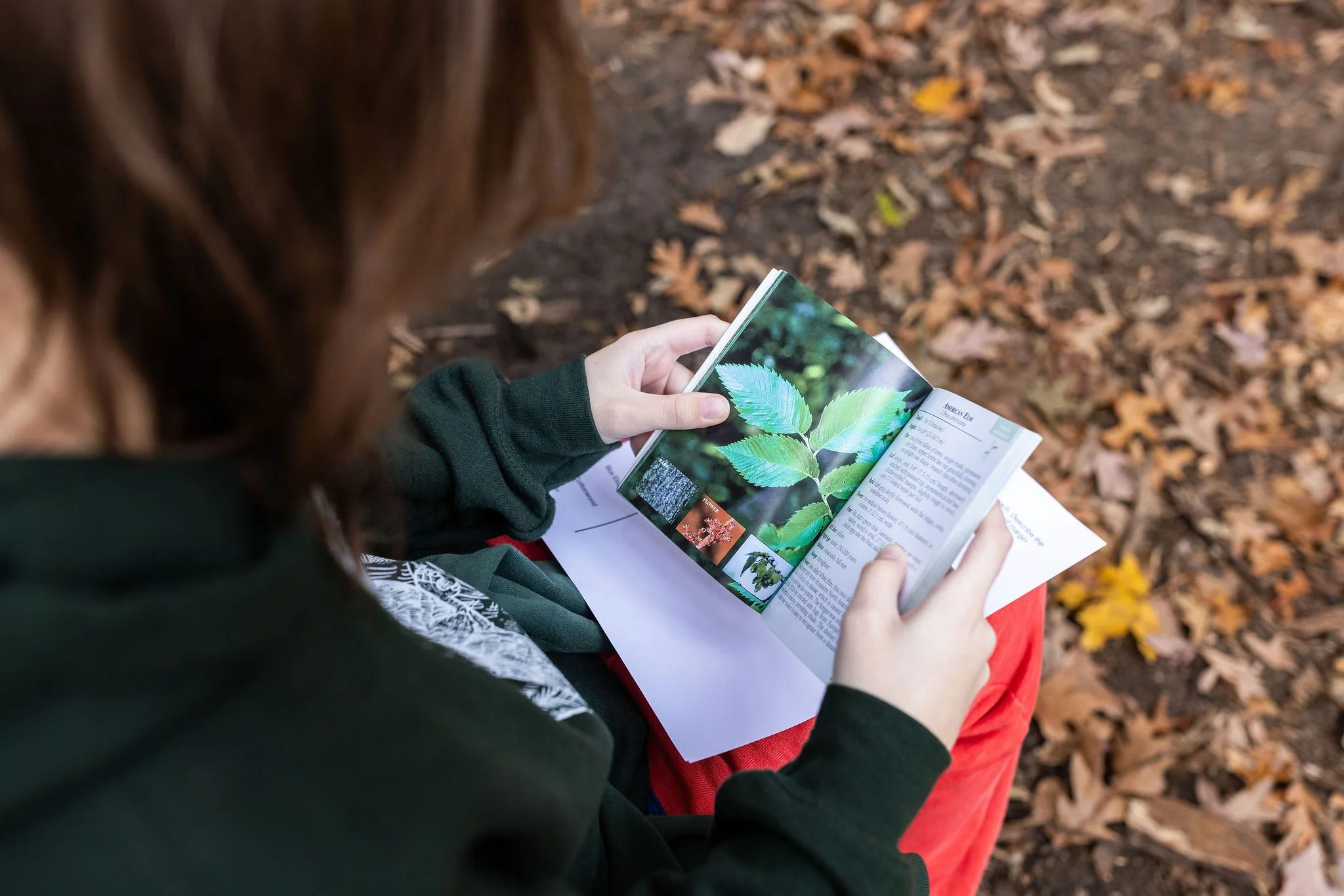

Students will have several classes in addition to the core class. Language and Mathematics are skills that need sequential learning and regular practice, so students will engage with lessons and skills practice daily. Other specialist classes and lessons will address topics beyond the core topic. Students will also engage in ecological work in the school forest.

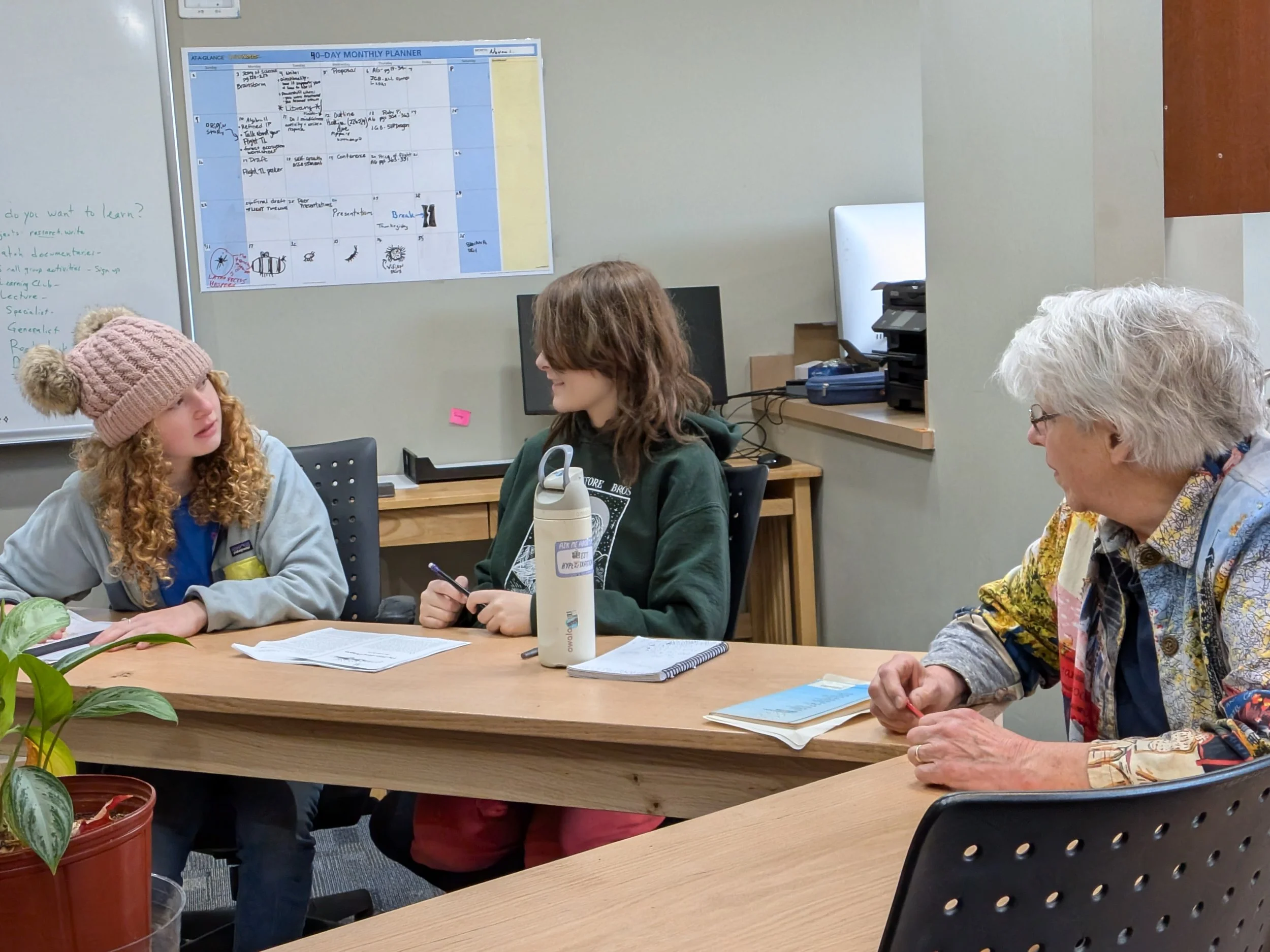
Weekly Schedule
Every morning we start with an hour in the forest. Sometimes this has a focus activity, like an ecological lesson or task, and sometimes it is free work time for students to build, socialize, and explore.
Next, we travel by bike or foot to our indoor space, the Schoolhouse. There we have classes in math and ELA.
During the lunch hour, students organize clubs.
Afternoons are dedicated to our core curriculum, with science, music, and humanities. We return to the forest in the mid-afternoon.
-
Every year, the Core themes will be inspired by the ancient elements: Earth/Sky/Fire/Water. For example, students start the year by considering the Earth. They are introduced to the school forest and its place in the ecological provinces. They study botany and animal science through their work in the forest. They apply math to their study of the forest with data analysis, inventory, averages, and statistics. They use the forest to inspire creative writing, and journal about their observations. They consider geography and the relationship between people and the land they inhabit, and students work with clay in art.
As the Core theme changes every quarter and the cycle repeats every year, students accumulate topics. For example, one year the Sky core seminar studies meteorology, another year it studies light and optics, and a third year it studies astronomy.
An important aspect of Core will be Community Service, which will bring the students into the real world while deepening their engagement with their school subjects.
The Core is designed to include: Science, ELA, Social Studies, Math application, Spanish acquisition, and Community Service.
-
The work cycle, so familiar to Montessori students, allows students to take the time they need for their educational goals. Small group lessons occur during open work.
-
An important part of our curriculum is ecological stewardship. Every year, the forest landowners will consult with the school about a particular land management goal. Students will present a plan back to the landowners for approval, then implement the plan throughout the year. Sample activities include:
Spring/Fall: Install plants, cage seedlings, pull buckthorn, pull garlic mustard, prescribed burn
Winter: Plant inventory/forest mapping, process fallen trees, burn brush
Year-round: care for domestic animals, build structures (benches, wildlife viewing blinds, tool shed), make and maintain a path, label specimens, treat disease.
-
Of the many subjects in the curriculum, mathematics is one that requires steady practice for mastery. Students will be expected to routinely participate in math practice and learning. While at OFA, students will complete a math course through Advanced Algebra. Students wishing to go further can utilize PSEO or tutoring options.
-
Unit classes are short courses that focus on topics outside of the Core Seminar. Sample topics include:
Personal Finance, Graphic Design, Business and Marketing, Engineering and CAD, Personal Fitness and Health, Science Lab, Music Theory, Chamber Music, ASL, Spanish, Woodworking
Faculty will design Core classes so that over the course of their four years at OFA, students will be exposed to:
Science: geology, biology, botany, animal science, chemistry, physics, ecology, hydrology, astronomy, and meteorology. They will have opportunity for labwork and field studies.
Social Studies: economics, geography, US history, world history, civics, government, world religions, philosophy
Mathematics applications, statistics, data analysis, computer science
ELA: Literature, fiction and non-fiction, research, critical thinking, analysis, rhetoric, argumentation, expressive writing, journalism, speech.
Spanish: Acquisition approach; vocabulary, grammar, conversation.
Art: drawing, color theory, photography, sculpting, graphic design
Technical and Career: Manufacturing, engineering, culinary arts
Community Service


Interested in Learning More?
